Capture hand and finger motion from a single video, generate motion through an API, and prepare your character, with pay-as-you-go pricing. Rokoko Vision offers more video per dollar on a subscription and sits inside Rokoko’s Studio and hardware workflow. This page compares the two on pricing, characters, exports, and API access, and says where each one fits.
New accounts get $5 of free credit. No subscription required.
Uthana demonstration: source video alongside Uthana Video-to-Motion 2.1 and 3.0 results, including hand motion. Competitor output is not shown.
Rokoko Vision 3.0 runs in the browser app Rokoko Create and sits next to Rokoko’s suits, gloves, and Studio software. Uthana offers Video-to-Motion, Text-to-Motion, auto-rigging, and retargeting on one pay-as-you-go balance. Which fits depends on how much footage you process, whether you need finger motion from video, and whether you build on an API.
Choose Uthana when you need hand and finger motion from video alone, when you want to generate motion through an API or from an AI assistant, when your character needs a skeleton first, or when you want to avoid a subscription.
Consider Rokoko Vision when you process a lot of video each month, since its plans include more seconds per dollar, or when you already work in Rokoko Studio. Real-time capture, glove-based finger capture, and several performers come from Rokoko’s hardware, which is a separate purchase. Uthana is independent and is not affiliated with Rokoko.
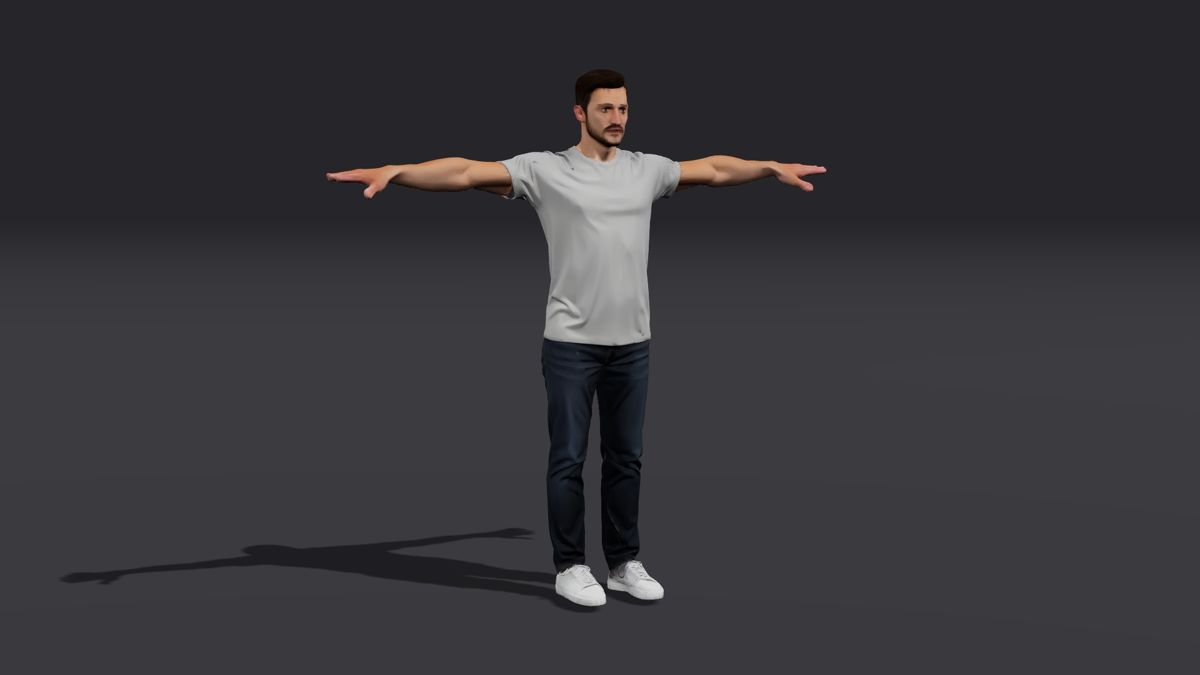
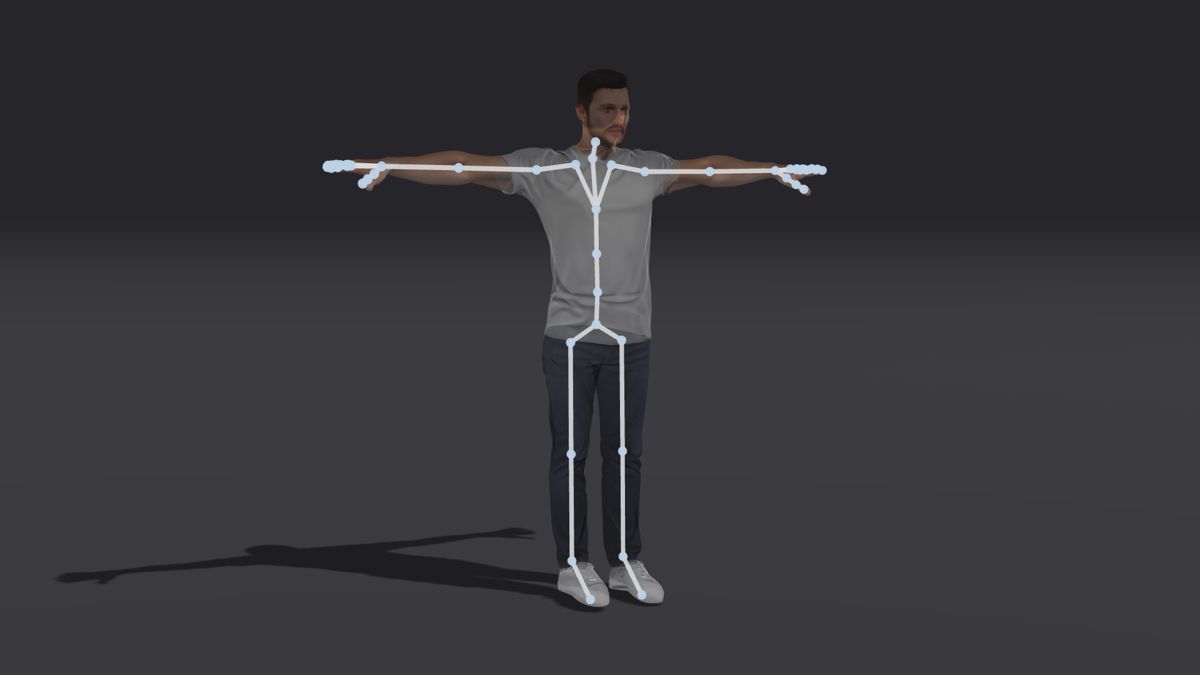
The whole job runs in one place. Upload a compatible FBX or GLB humanoid character and use auto-rigging if it needs a skeleton. Generate motion from video or text, then apply it to the character through motion retargeting and export FBX, GLB, or BVH. The viewer below shows one source motion on two characters, and the stills show a mesh before and after rigging.
Review the rig overlay, joints, and movement on each character. Mesh geometry, proportions, rest pose, and skeleton suitability affect the result. Start with representative assets before scaling a workflow across a character collection.

The same source motion, retargeted by Uthana to two compatible character rigs.
Rokoko Studio offers live streaming to engines from its Plus plan and a command API for operating Studio, with advanced commands on Pro; an API for generating motion from video or text is not publicly documented in the Rokoko pages reviewed. Uthana’s GraphQL API is self-serve: create an API key, generate motion from video or text, rig and upload characters, and download motion retargeted to each one, all on the same balance as the web app. The same tools are available to AI assistants through Uthana’s MCP server.
The web app and API share one credit balance. Use the API quickstart, auto-rigging documentation, and retargeting documentation to plan the integration.
Take ten minutes of video in a month. Rokoko’s Basic plan includes 600 seconds for $10 a month billed annually ($120 a year), or $12 billed monthly. Uthana bills Video-to-Motion per second of output motion: assuming 600 seconds of output, Video-to-Motion 3.0 at $0.06 per second is $36, and that price includes hand and finger motion. For steady monthly volume Rokoko costs less; for occasional use, a 30-second clip on Uthana is $1.80, with no subscription. New accounts get $5 of free credit. See current pricing for rates.
Rokoko costs less for steady monthly capture. The reasons to choose Uthana are finger motion from video, character preparation, flexible spending, and developer access. You also get more ways to find the right motion: search Uthana’s studio-grade motion-capture library in plain language, generate a new performance with Text-to-Motion, reconstruct reference footage with Video-to-Motion, and automate character preparation and retargeting through the API.
No. Uthana is independent and is not affiliated with Rokoko. Rokoko Vision, Rokoko Create, and Rokoko Studio are Rokoko’s products.
There is no plan to choose. New accounts get $5 of free credit. After that, Uthana is pay as you go, with no subscription and no minimum.
Yes. Upload a bipedal humanoid in FBX or GLB. If it has no skeleton, auto-rigging adds one for $0.15, and motion is retargeted to it.
Yes. Video-to-Motion 3.0 includes hand and finger motion from single-person video. Rokoko’s Vision FAQ says finger tracking was not included at the Vision 3.0 launch and points users to its Smartgloves.
Yes. Uthana’s GraphQL API is self-serve and uses the same credit balance as the web app. An MCP server is available for AI assistants.
From video alone, Rokoko Vision captures the body motion of a single performer; Rokoko says fingers were not included at launch. Real-time capture, finger capture with Smartgloves, face capture, and several performers come from Rokoko’s separate hardware and Studio software. Uthana works from video or text with no hardware: body, hand, and finger motion from single-person video, and no real-time or face capture.
Test Uthana with a short clip and a character you actually use. Preview the motion, check the retargeting on your character, and export it into your workflow. For platform integrations or larger volumes, talk to Uthana.